If you’ve spent any time in the BTS ARMY fandom, you’ve definitely heard it: Jeon Jungkook, the youngest member of BTS, is the Sold Out King. And no, that’s not just fans being dramatic. It is actually an economic reality that global corporations and academic researchers track closely.
The moment Jungkook touches something, whether it’s a Calvin Klein campaign, a bottle of Downy fabric softener, or a pair of sneakers, the internet collectively loses its mind, and the product disappears from shelves. This isn’t a coincidence.
The commercial influence Jungkook wields spans everyday consumer goods all the way to high-end luxury fashion. And it’s backed by real numbers, academic case studies, and corporate strategy shifts. Let’s get into it.
The Teazen Kombucha Case: How Jungkook Built an $80 Million Brand by Drinking Tea
The Teazen Kombucha case isn’t just about sold-out shelves. It’s about a single live-stream moment that eventually led to a private equity firm writing an $80 million check.
What happened on February 27, 2021
During a casual live video stream, Jungkook mentioned that he typically drinks two packets of Teazen Lemon Kombucha a day. He wasn’t paid to say it. There was no brand deal. He just… mentioned it while living his life on camera.
That was enough.
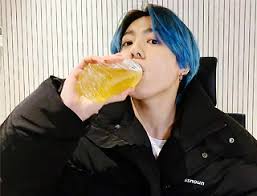
Within three days of that broadcast, Teazen’s entire inventory of the lemon-flavored powder — equivalent to one full month of global stock — sold out completely across major digital retail outlets. (Cha, 2021)
Three days. One month of stock. Gone.
The scale of what came after
The immediate sellout was just the beginning. Once the dust settled on the initial frenzy, the numbers that followed told a much bigger story:
- Teazen experienced a fivefold jump from its baseline daily sales volume almost immediately after the broadcast.
- The brand was flooded with export inquiries from international food and beverage distributors who had never paid attention to the company before.
- What had been a relatively modest Korean health drink brand was suddenly on the radar of global importers.
This is what happens when ARMY shops. It isn’t just a single purchase spike that fades in a week. It creates sustained commercial momentum that restructures how a brand is perceived internationally.
I have also made a video on Instagram about how Jungkook is called the Sold Out King that you can check out. Feel free to drop a hi to me there! <3
The private equity punchline
Here’s where the story goes from impressive to genuinely extraordinary.
By 2022, Teazen’s growth trajectory, significantly boosted by that single organic mention, had made it attractive enough for a major corporate acquisition. Private equity house VIG Partners purchased a majority stake in Teazen for approximately 100 billion KRW, roughly $80 million USD.
Think about that chain of events:
- Jungkook drinks kombucha on a live stream.
- A month of stock vanishes in three days.
- Export inquiries pour in from international distributors.
- Daily sales jump five times over.
- A private equity firm pays $80 million for the brand.
No marketing campaign. No celebrity contract. No promotional strategy. Just a casual mention and the Sold Out King doing what he does.
Why this case study stands apart
Most “celebrity effect” stories end at the sold-out product. The shelves restock, the hype fades, and life goes on. The Teazen case is different because Jungkook’s mention didn’t just create a temporary spike. It fundamentally changed the company’s valuation trajectory and export ambitions in a way that attracted institutional investment.
That’s not a fan purchasing moment. That’s a macroeconomic event with a paper trail all the way to a private equity deal. For a small to medium-sized enterprise, the kind of brand visibility that leads to an acquisition-level valuation jump can take years of sustained marketing efforts to build.
Jungkook did it in a three-day window by drinking his morning kombucha.
The Jungkook X Calvin Klein Effect: When a Campaign Breaks the Internet
Let’s start with the one that arguably put the “Sold Out King” title on a global pedestal. In March 2023, Calvin Klein officially signed Jungkook as their Global Brand Ambassador for Calvin Klein Jeans and Underwear. What happened next was nothing short of remarkable.
The market response was immediate. We’re not talking about a slow build. We’re talking about the kind of sales spike that makes brand executives stare at their dashboards in disbelief.
What the numbers actually looked like
The teaser dropped on March 27, 2023, and the stock price of PVH Corp (Calvin Klein’s parent company) experienced a rapid, measurable spike. That’s the Jungkook effect extending beyond retail and into financial markets.
That last one is worth sitting with for a second. A K-pop idol’s brand announcement moved a publicly traded company’s stock. That’s the Jungkook effect extending beyond retail and into financial markets.
The academic angle: the VisCAP Model
This isn’t just fandom hyperbole. Researchers have actually studied it. Academic analysis of the Calvin Klein partnership used the VisCAP Model, a framework that measures a celebrity endorser’s impact across four dimensions:
- Visibility — how prominent is the celebrity in the public eye?
- Credibility — do audiences trust and believe in them?
- Attraction — do they have strong appeal to the target market?
- Power — can they actually shift behavior?
According to the research, Jungkook maximized all four quadrants. Not just one or two. All four. That’s what academics call “unprecedented brand leverage.”
A separate study on luxury ambassador metrics put it plainly: a highly aligned global ambassador alters short-term customer purchasing behavioral intention.
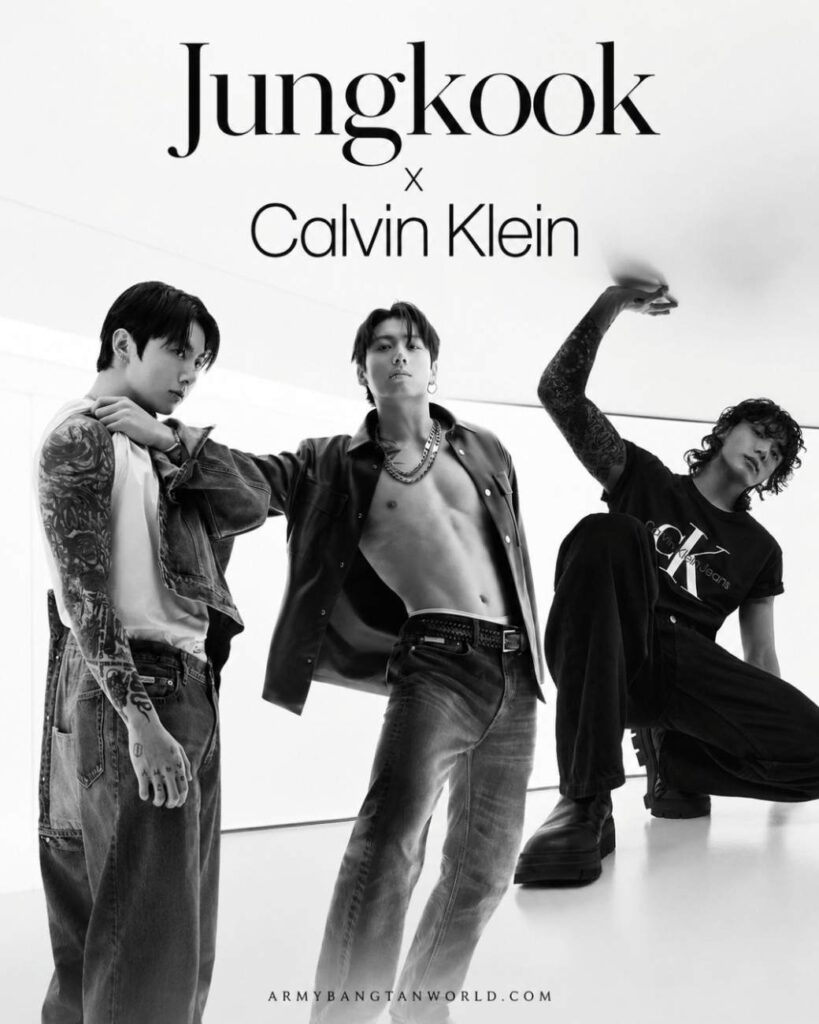
So yes, when ARMY collectively calls Jungkook the Sold Out King, there’s a whole body of research and a PVH Corp stock chart nodding along in agreement. And this was just the Calvin Klein chapter. There’s a lot more where that came from.
I have also spoken about the CKJK campaign in detail within my video on Instagram!
The “Accidental Endorsement” Paradigm: The Downy Case Study
Here’s the thing about Jungkook’s influence — it doesn’t always come from a polished campaign or a multimillion-dollar deal. Sometimes it comes from a casual conversation about laundry.
One of the most talked-about moments that cemented his “Sold Out King” title happened completely by accident. No stylist. No brand brief. No PR team. Just Jungkook, a fan chat, and a bottle of fabric softener.
What actually happened?
On January 20, 2019, during a casual chat on Weverse, Jungkook casually mentioned the specific brand of fabric softener he used for his laundry: Downy Adorable.
That’s it. That was the whole “endorsement.”
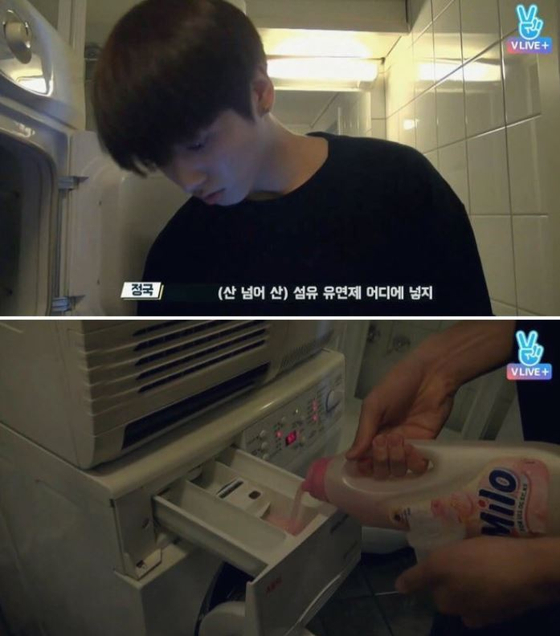
What followed was anything but casual. Within hours, a massive wave of impulse buying swept through South Korean e-commerce platforms. A two-month supply of Downy Adorable was completely wiped out across major retail sites in South Korea — in less than a day.
The corporate fallout
The supply chain shock was so significant that Procter & Gamble Korea (Downy’s parent company) had to issue an official statement just to explain why its product had vanished from shelves.
Let that sink in. A global consumer goods giant was issuing press statements because of a fan chat.
And then Jungkook himself posted a lighthearted update saying he couldn’t even buy his own fabric softener anymore. It was sold out. For him. Because of him.
It’s genuinely one of the funniest and most telling moments in K-pop fandom history.
Why this matters beyond the story
The Downy incident isn’t just a fun anecdote. It’s actually studied in academic literature as a textbook example of K-pop behavioral economics and consumer fanaticism altering real retail data metrics.
The reason it gets this much academic attention is that no official endorsement structure existed. Jungkook received no payment. There was no campaign. No hashtag. No coordinated push from the fandom. Just one organic mention that triggered a measurable, documentable supply chain disruption.
That’s a level of influence most brands spend millions trying to manufacture. Jungkook did it while talking about his chores.
- No paid partnership
- No coordinated fandom campaign
- No official brand content
- Just one casual mention = two months of stock wiped out in under 24 hours
The Downy case study is arguably the clearest proof of what separates Jungkook from your average celebrity endorser. When brands sign him officially, they’re essentially formalizing a power that already exists organically. The influence comes first. The contract comes after.
Solo Commercial Power & The Record-Breaking “GOLDEN” Launch
Calvin Klein. Downy. Those are big stories. But if you really want to understand the full scale of what Jungkook’s commercial power looks like, you have to talk about GOLDEN.
Because this wasn’t just a successful album launch. This was a 23-year-old stepping out on his own for the first time and rewriting the record books in the process.
What GOLDEN actually did in its first week
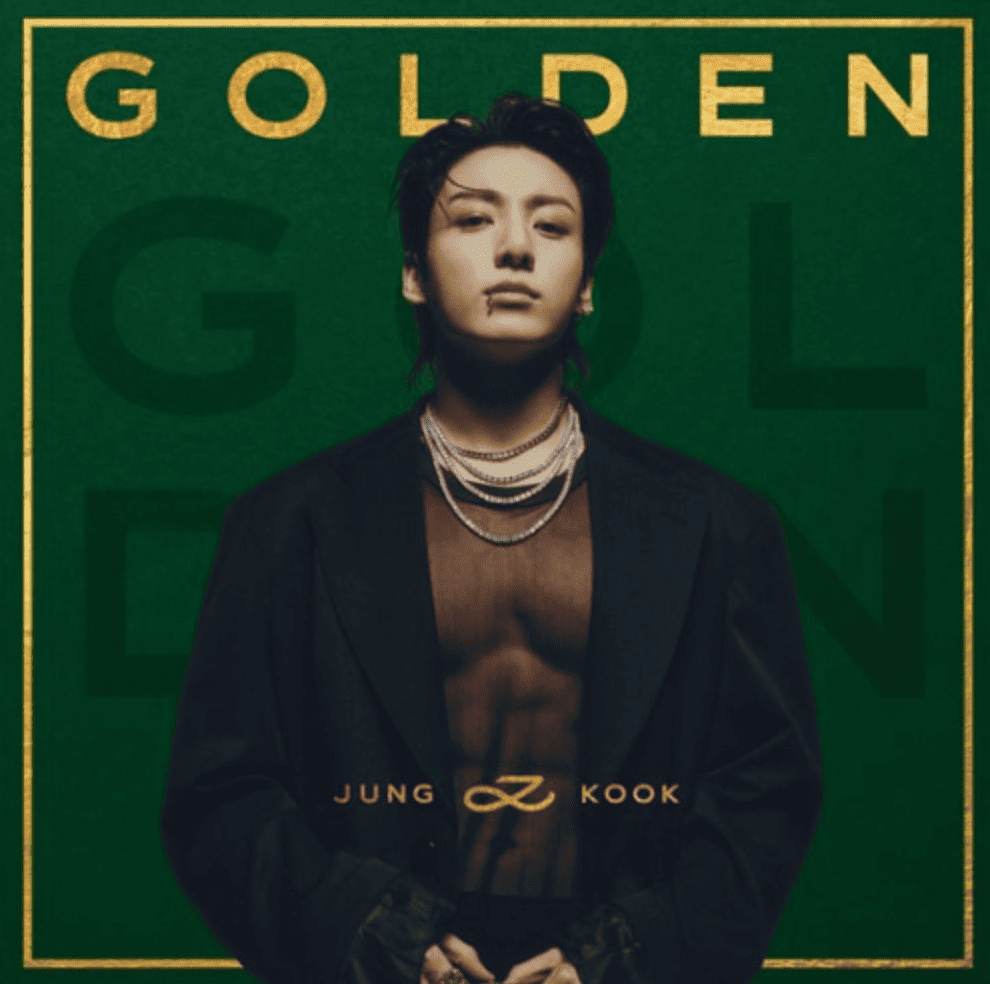
Jungkook’s solo debut album, GOLDEN, dropped in November 2023. The numbers that came in were, frankly, staggering.
- Over 2.43 million physical copies sold globally in the first week alone. (Jaffar, 2024 — Wah Academia
- More than 200,000 pure copies sold in the United States in week one.
- That US figure set a record as the most physical copies ever sold by a K-pop solo artist in the American market in a debut week. (Jaffar, 2024)
To put that into perspective: this was his first solo album. Not a greatest hits collection. Not a tenth anniversary release. A debut.
The HYBE angle: why this goes beyond music
Here’s where things get interesting from a business standpoint.
When BTS members began entering mandatory military service, the natural fear in the market was straightforward: what happens to HYBE’s revenue when the group isn’t actively promoting together? Group hiatuses are typically a significant financial risk for music companies. Investor confidence wobbles. Quarterly numbers dip.
GOLDEN effectively answered that question.
Jungkook’s solo commercial dominance allowed HYBE to sustain record-breaking quarterly financial numbers even through the group hiatus period. One member’s solo album functioned as a genuine macroeconomic buffer for an entire publicly traded entertainment company.
That is not a normal thing for a solo debut to do.
What this tells us about the “Sold Out King” title
The GOLDEN launch proves that Jungkook’s influence isn’t limited to products sitting on a shelf somewhere. It extends to:
- Global physical music retail across multiple markets simultaneously
- Streaming economy metrics in the US, are notoriously difficult for non-English language artists
- Corporate financial stability at the parent company level
- Investor sentiment around a major publicly traded entertainment conglomerate
Most artists spend their entire careers hoping to hit numbers like this. Jungkook hit them on his first solo attempt, in the middle of what should have been a commercially vulnerable period for his company.
The Sold Out King title applies to albums, too. Apparently.
Other content you can check out:
So, Why Is Jungkook Called the Sold Out King?
By now, the answer should be pretty clear. But let’s put it all together.
Jungkook doesn’t just sell things. He reshapes supply chains, moves stock prices, rescues quarterly earnings reports, and turns small Korean health drink brands into $80 million acquisition targets. All of this while being, by most accounts, genuinely unaware of the economic chaos he’s casually leaving behind.
That’s what makes the “Sold Out King” title different from any other celebrity influence story. Most of it wasn’t engineered. The Downy mention was laundry talk. The Teazen moment was a live stream. GOLDEN was a debut album in the middle of a group hiatus. Even the Calvin Klein campaign, the most “official” item on this list, produced results that went far beyond what any brand partnership is reasonably expected to deliver.
The pattern is consistent across five years, multiple industries, and every price point from fabric softener to luxury fashion:
- A casual mention wipes out two months of stock overnight.
- A live stream triggers a five-fold sales jump and ends in a private equity acquisition.
- A debut album sells 2.43 million copies in a week and stabilizes a publicly traded company’s financials.
- A single campaign announcement moves a Fortune 500 parent company’s stock price.
Researchers have a framework for it (the VisCAP Model). Economists study it as behavioral economics. Supply chain managers apparently have to account for it now.
But for ARMY? It’s just Tuesday.
The Sold Out King title isn’t hype. It’s a documented, peer-reviewed, stock-market-verified economic phenomenon wearing a very good-looking Calvin Klein campaign. And honestly, we wouldn’t have it any other way.
References & Sources
All claims in this article are backed by academic research and verified journalism.

Hi! Just like many of you, I didn’t found BTS. They found me exactly when I needed them the most. I created Army Bangtan World to celebrate BTS and connect with fans who feel the same magic. From their music to their message, this site is my tribute to the boys who changed my life. One beat at a time.