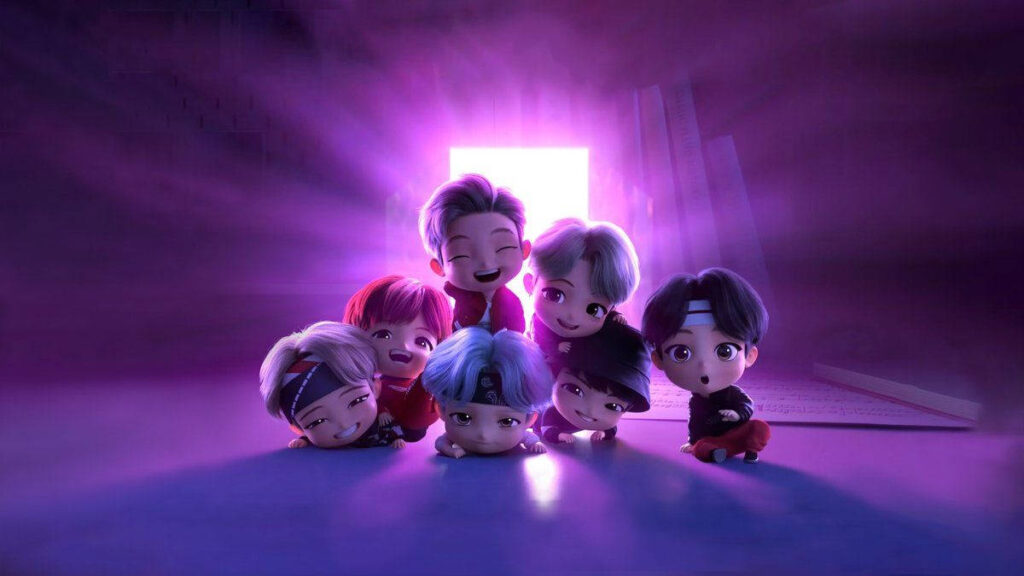
Jung Hoseok, better known as J-Hope (Hobi), is a South Korean rapper, dancer, songwriter, and producer. He is one of the core members of BTS. Celebrated as the group’s main dancer and an energetic performer, J-Hope brings rhythm, precision, and sunshine-like positivity to every stage.
His journey reflects relentless discipline and artistic growth, moving from an underground dancer in Gwangju to a globally recognized solo artist. Explore the full roster of BTS profiles here: BTS Members Guide.
BTS J-Hope Facts & Profile (Quick Preview)
| Category | Information |
| Full Name | Jung Hoseok (정호석) |
| Stage Name | J-Hope |
| Nicknames | Hobi, Sunshine |
| Date of Birth | February 18, 1994 |
| J-Hope Age (2025) | 31 years |
| Birthplace | Gwangju, South Korea |
| Family | Parents, older sister |
| Height | 177 cm (5’9.5”) |
| Blood Type | A |
| Zodiac Sign | Aquarius |
| Chinese Zodiac | Dog |
| MBTI Type | INFJ (previously ESFJ) |
| Nationality | South Korean |
| Education | Global Cyber University |
| Position in BTS | Main Dancer, Rapper |
| Agency | BIGHIT MUSIC (HYBE Labels) |
| Active Years | 2013–present |
| Military Service | Enlisted April 2023 — Discharged 2024 |
| Fandom | ARMY |
| Here |
Early Life & Childhood
Jung Hoseok was born on February 18, 1994, in Gwangju, a city known for its strong cultural identity. From a young age, Hoseok gravitated toward movement and rhythm rather than traditional academics or vocal performance.
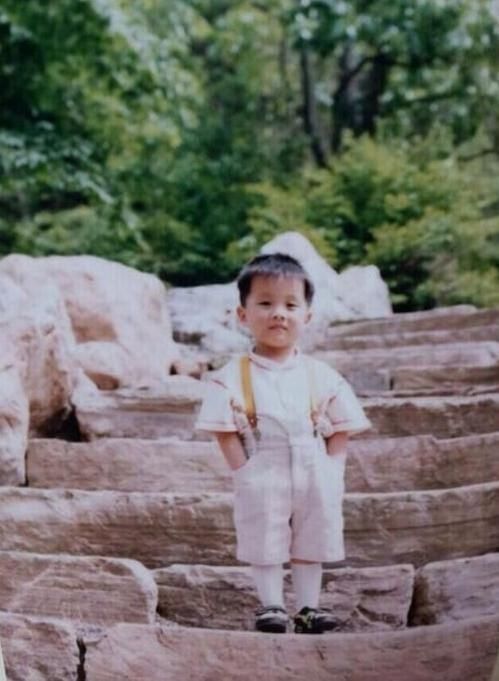
Unlike many idols who begin as singers, dance was Hoseok’s first language. He trained extensively in street dance styles such as popping, locking, and hip-hop, and later became part of the underground dance crew Neuron. These early years instilled not only technical skill but also performance confidence and stage awareness.
His background as a dancer strongly shaped the performer ARMY sees today—precise, expressive, and deeply musical.
How J-Hope Joined BigHit Entertainment?
J-Hope joined BigHit Entertainment primarily as a dancer, not as a rapper. During auditions, his dance ability stood out immediately, and he was recruited for his performance potential rather than his vocal or rap skills.
Initially, Hoseok trained as a vocalist and dancer, but as BTS’s lineup evolved, RM encouraged him to explore rap due to his natural sense of rhythm and timing. Transitioning into the rap line was not easy—he had no prior rapping experience and had to start from scratch.
This mirrors the growth journey seen in members like BTS Jin, who also entered BigHit without formal musical training and built his skills through persistence.
Pre-Debut: Trainee Years & Growth
- Trained as a vocalist and dancer, later added rap
- Worked intensively on lyrical flow and delivery
- Competed with peers who had early rap experience
J-Hope was methodical, serious about practice, and often led choreography sessions, hinting at the performance leadership he would bring to BTS.
BTS Debut & J-Hope’s Role
J-Hope officially debuted with BTS on June 13, 2013, through 2 Cool 4 Skool. From the group’s earliest performances, he stood out for sharp execution, facial expression, and stamina.
In BTS’s early years, his role centered on:
- Leading choreography execution
- Enhancing stage energy
- Supporting rap verses with rhythm-heavy delivery

Alongside members like Min Yoongi (Suga), J-Hope helped shape BTS’s rap line with contrast—bringing brightness and groove against darker, introspective tones.
Role of J-Hope in BTS
- Main Dancer: Leads choreography and visual execution
- Rapper: Provides rhythmical balance in BTS’s rap line
- Performance Leader: Guides formation and show flow
- Mood Uplifter: Known for encouraging and uplifting the team
Dance Style, Technique & Stage Presence
J-Hope’s dance style is rooted in street dance but refined for large-scale performances. His strengths include:
- Clean isolations and transitions
- Strong core control
- Musical interpretation rather than memorization
Stage Presence
He adapts expressions to each concept, making his performances feel narrative-driven. This ability to tell a story through movement is why he dominates festival stages and solo performances.
Rap Style & Musical Identity
J-Hope’s rap style is:
- Rhythm-driven
- Melodic and groove-based
- Emotionally expressive
Rather than aggression, his verses often focus on ambition, hope, pressure, and self-belief. Over time, his lyricism matured to include vulnerability and artistic introspection.
BTS Discography Contributions by J-Hope
| Album | Songs | Contribution |
| WINGS | Mama | Solo |
| Love Yourself: Tear | Outro: Tear | Rap Line |
| Map of the Soul: 7 | Outro: Ego | Solo |
| BE | Dis-ease | Rapper |
| Proof | Yet To Come | Group Vocal |
J-Hope’s Solo Career & Artistic Evolution
Hope World (2018)
A colorful mixtape that introduced J-Hope’s optimism and individuality, charting on the Billboard 200.
Jack In The Box (2022)
A darker, concept-driven album exploring fear, identity, and pressure—marking his artistic turning point.
On the Street (2023)
A reflective farewell before military service, emphasizing gratitude and connection.
Historic Moment: Lollapalooza Headliner
In July 2022, J-Hope made history by becoming the first Korean artist to headline Lollapalooza, one of the world’s most influential music festivals. This milestone went far beyond personal achievement—it marked a defining moment for K-pop’s acceptance on major Western festival stages traditionally dominated by rock, hip-hop, and alternative acts.
What set J-Hope’s Lollapalooza performance apart was its complete artistic independence. Unlike stadium concerts supported by group branding, he commanded the stage alone for nearly an hour, relying solely on his solo discography, stage presence, and live performance ability.
The setlist heavily featured tracks from Jack In The Box and Hope World, allowing him to showcase contrasting sides of his artistry—bright optimism, raw intensity, and introspection.
Critics and audiences praised the performance for several reasons:
- Live vocals and rap delivery: J-Hope maintained vocal stability and breath control throughout a high-intensity set, even during demanding choreography-heavy segments.
- Choreography stamina: His ability to sustain sharp, controlled movement while performing live underscored his reputation as one of K-pop’s strongest performers.
- Crowd engagement: He demonstrated exceptional crowd control, seamlessly interacting with a festival audience that included many non-K-pop listeners, proving his appeal beyond an existing fanbase.
- Artistic confidence: The performance emphasized that J-Hope was not merely representing BTS, but standing as a solo artist with a clear musical identity and vision.
International media outlets described the set as “commanding,” “genre-defying,” and “festival-ready,” reinforcing the idea that K-pop artists could thrive in spaces traditionally resistant to idol-driven performances. For many viewers, J-Hope’s Lollapalooza stage served as a turning point—shifting perceptions of what K-pop soloists can achieve on global platforms.
Additionally, Jhope also headlined Lollapalooza in Berlin in 2025. And can we talk about the performance? ARMYs worldwide went gaga over it!
Especially seeing Jhope shirtless and performing killin’ it girl was the highlight.
J-Hope’s Solo Tour: Hope On the Stage
Hope On the Stage marked J-Hope’s first full-scale solo tour, and it felt like a natural continuation of everything he had built through Hope World, Jack In The Box, and his historic festival performances. Rather than positioning the tour as a spin-off from BTS, J-Hope approached it as a statement of identity—centered on performance, storytelling, and emotional honesty.
The tour’s concept focused on duality: hope versus pressure, brightness versus fear, and public persona versus private self. Each set was carefully structured to reflect different phases of his artistic journey, blending explosive choreography with quieter, introspective moments. Tracks from Jack In The Box carried a darker, more experimental tone, while songs like Daydream and Hope World brought back the optimism that first defined his solo sound.
What truly set Hope On the Stage apart was J-Hope’s command of the live environment. Performing solo for extended durations, he relied entirely on his stage presence, dance stamina, and audience connection—without the support of group formations or shared vocal lines. His transitions between high-energy choreography and emotionally grounded rap sections showcased his growth as a complete performer rather than just a main dancer or rapper.
Personal Experience: Singapore Show (April 26)
I personally attended J-Hope’s Hope On the Stage concert in Singapore on April 26, and it was one of the most immersive live performances I’ve experienced. The energy in the venue was electric, but what stood out most was how intimate the performance still felt, even in a large concert setting.
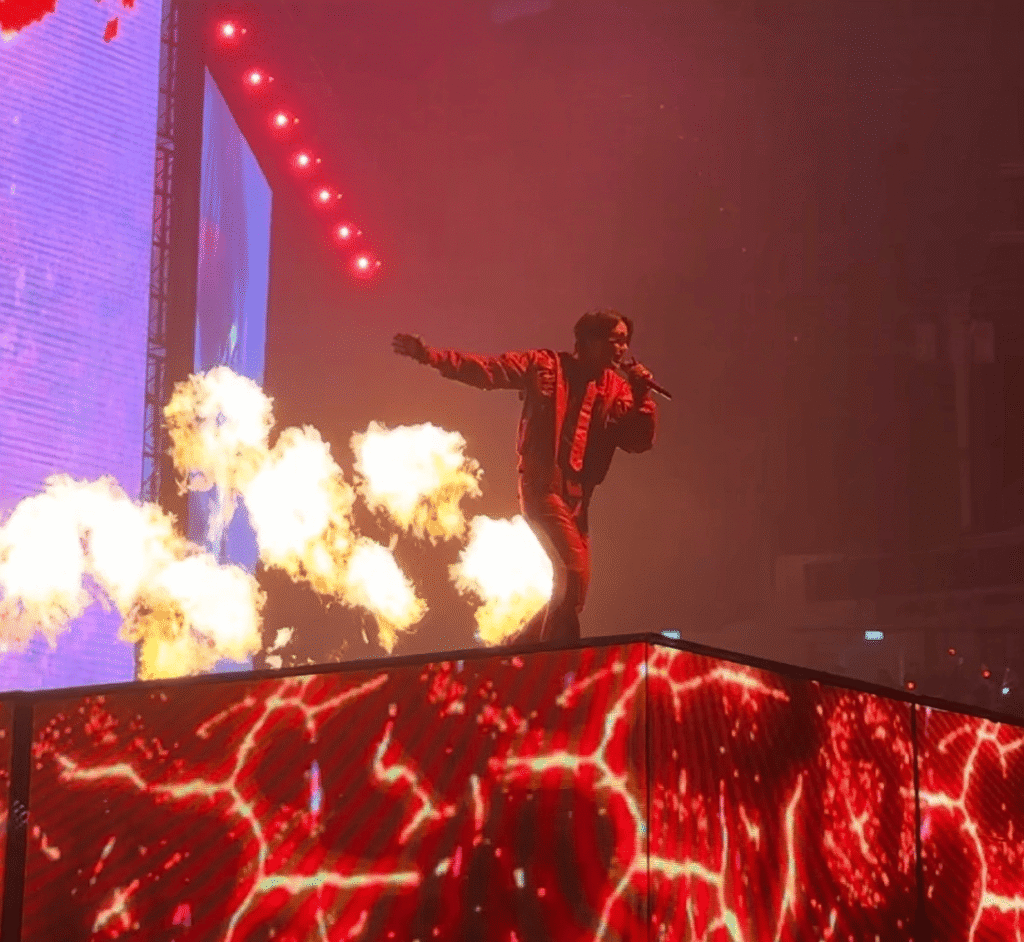
J-Hope spoke openly to the audience, shared reflections on his journey, and made the crowd feel actively involved rather than simply spectating. His control over pacing—knowing exactly when to push intensity and when to let moments breathe—highlighted years of performance discipline. Watching him live made it clear that his strength lies not only in choreography or rap, but in his ability to hold emotional space on stage.
For many fans, Hope On the Stage wasn’t just a concert—it was confirmation that J-Hope had fully stepped into his era as a solo global performer, capable of carrying an entire tour with confidence, depth, and authenticity.
Military Service (2023–2024)
J-Hope enlisted on April 18, 2023, serving as an Assistant Instructor, a role assigned to soldiers demonstrating leadership and discipline. He was discharged in 2024 and resumed activities shortly after.

Personality, Interests & Public Image
J-Hope is widely admired for balancing:
- Discipline with optimism
- Perfectionism with warmth
- Leadership with humility
His interests include fashion, art, music production, and mentoring younger performers.
Awards, Recognition & Impact
J-Hope consistently ranks high in brand reputation, receives critical praise for solo projects, and is widely credited for elevating BTS’s live performance standards.
You can explore all the awards won by bts with my guide.
J-Hope’s Legacy in BTS
J-Hope’s legacy lies in performance excellence and emotional resilience. He proves that positivity can coexist with discipline and that growth often begins outside comfort zones.
His journey complements narratives like BTS Jin’s steady evolution and Suga’s introspective artistry, strengthening BTS’s collective identity.
FAQs About BTS J-Hope
“Hobi” is an affectionate nickname derived from Hoseok and reflects his playful, approachable personality.
It represents his desire to be a source of hope and positivity through music and performance.
He served as an Assistant Instructor, indicating leadership and exemplary service.
Yes. He is officially the main dancer and performance leader.
No. He began as a dancer and later trained as a rapper.
Yes—Hope World, Jack In The Box, and solo singles define his independent career.

Hi! Just like many of you, I didn’t found BTS. They found me exactly when I needed them the most. I created Army Bangtan World to celebrate BTS and connect with fans who feel the same magic. From their music to their message, this site is my tribute to the boys who changed my life. One beat at a time.