There are BTS songs that make you dance. There are BTS songs that make you cry. And then there’s Black Swan — the one that makes you sit in silence and stare at the ceiling, wondering why seven guys from South Korea just articulated your deepest creative fears better than you ever could.
Hands down, one of the most poetic songs by BTS. In this post, I’ll break down BTS Black Swan meaning, lyrics, and everything we know so far!
Black Swan By BTS – What Is The Song About?
| Detail | Info |
| Song Name | Black Swan |
| Album | Map of the Soul: 7 |
| Released | January 17, 2020 |
| Written by | Pdogg, RM, August Rigo, Vince Nantes, Clyde Kelly |
| Produced by | Pdogg |
| Label | Big Hit Entertainment |
| Genre | Emo Hip-Hop / Trap |
| Art Film | MN Dance Company (Slovenia) |
| MV Directors | YongSeok Choi & Guzza (Lumpens) |
Before we get into the BTS Black Swan meaning, it helps to know the reference. A black swan is a term that carries weight in literature and philosophy: it represents something rare, unexpected, and often catastrophic when it arrives. In everyday usage, people assumed all swans were white — until black swans were discovered in Australia and changed everything that seemed certain.
The song was also directly inspired by Darren Aronofsky’s 2010 film of the same name, which follows a ballerina tormented by a dark version of herself. RM rewatched the film while writing, and according to multiple reports, cried multiple times throughout the process
“A dancer dies twice — once when they stop dancing, and this first death is the more painful.” — Martha Graham, choreographer (opening quote of the Black Swan art film)
That Martha Graham quote literally opens the art film. And it’s everything. Because what BTS is really asking, what the whole song orbits around, is this: what happens when the thing you love most stops making you feel anything?
The BTS Black Swan Meaning: A Fear Only Artists Truly Understand
Here’s what the song is really about: the terror of losing passion for your craft.
At the time of writing this, BTS had already become one of the biggest acts in the world. They’d sold out stadiums. They’d hit the Billboard Hot 100 multiple times. They had literally changed the trajectory of Korean pop music globally. And yet — here they were, writing a song about the fear that music would one day stop moving them.
That’s not a PR stunt. That’s deeply, uncomfortably human.
Korean media described the song as “a confession of an artist who has truly learned what music means to himself,” one where BTS dives into the inner self and faces the shadow it had been hiding as an artist.
The Spotify storyline for the track puts it plainly: the song voices BTS’s darkest fear — that the music they create will one day cease to touch or move them.
Think about that. Not the fear of losing fame. Not the fear of bad reviews. The fear that the music itself will go silent inside them.
By the numbers:
- Black Swan debuted at #57 on the US Billboard Hot 100
- #1 on the US World Digital Song Sales chart
- #46 on the UK Official Singles Chart
- Map of the Soul: 7 sold 4.1 million+ copies in under 9 days, setting a Guinness World Record
Breaking Down the Black Swan BTS Lyrics
Now let’s actually go through the lyrics because Black Swan BTS lyrics are layered in a way that rewards multiple listens (and reads).
Suga — The Moment of Silence (First Verse)
Suga opens by describing a heart that no longer beats upon hearing music — time has stopped, and this stillness is described as the “first death.” He’s terrified of it. He’s been afraid of this moment his whole life.
“The heart no longer beats / Anymore when it hears music / Tryna pull up, time seems to have stopped / Oh that would be my first death, I’ve always been afraid of”
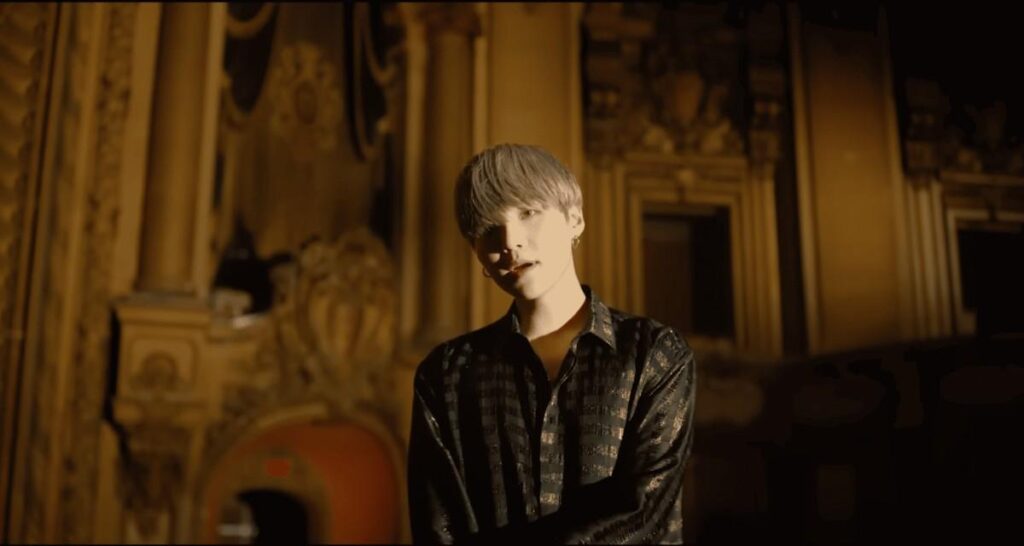
It’s worth noting that this is Suga — the same person who put out Agust D, who talked openly about his own mental health, who’s famously known for pouring everything into his music. The fact that even he fears going numb to it? That hits differently.
RM — The Addiction Problem (Second Verse)
RM’s verse is where things get even more complex. He reframes the relationship with music as an addiction — something so intertwined with identity that you can’t let it go even if you wanted to.
“If this can no longer resonate / No longer make my heart vibrate / Then like this may be how I die my first death / Say dedication turns to an addiction / I can’t break it off, I can’t let it go.”
In an interview with Billboard, RM said, “Love is not always about the good things. When we love something or somebody, it’s like admitting, recognizing all the history that someone or something has. It could be shades and shadows, maybe some dark sides.”
Jimin — The Silent Cry
“No song affects me anymore / Crying a silent cry.”
Four words. “Crying a silent cry.” Jimin delivers this so quietly it almost floats past you — which is exactly the point. This is what creative burnout actually looks like. Not dramatic. Just empty. Quiet. Invisible to everyone around you.
The Sea, the Sinking, and the Hidden Track Easter Eggs
One beautiful layer of the Black Swan BTS meaning is how fans noticed callbacks to older BTS hidden tracks buried in the lyrics:
- “Sea” (hidden track from Love Yourself: Her) — referenced in the imagery of light sinking into silence at sea
- “Path” (hidden track from their debut album 2 Cool 4 Skool) — referenced in “It again seizes my ankle that lost the path”
So the song becomes a full-circle moment — connecting BTS’s earliest dreams and biggest hopes with their present fear of losing what made all of that meaningful in the first place.
The Second Half: Hope Resurfaces
Here’s what people sometimes miss about Black Swan — it doesn’t stay in the darkness. The second half of the song shifts. The singer plunges deeper, into “the deepest place,” and that’s where they finally see themselves. The black swan isn’t just the darkness. It’s also the moment of clarity that comes from confronting it.
Every time they face their inner black swan, they hear a voice from deep inside reminding them — music is all they have. The fear of losing it becomes proof of how much it means to them. That’s the paradox the song is built on.
The Art Film and Black Swan Music Video: Visual Poetry
BTS actually released two music videos for Black Swan, which was unusual and very intentional.
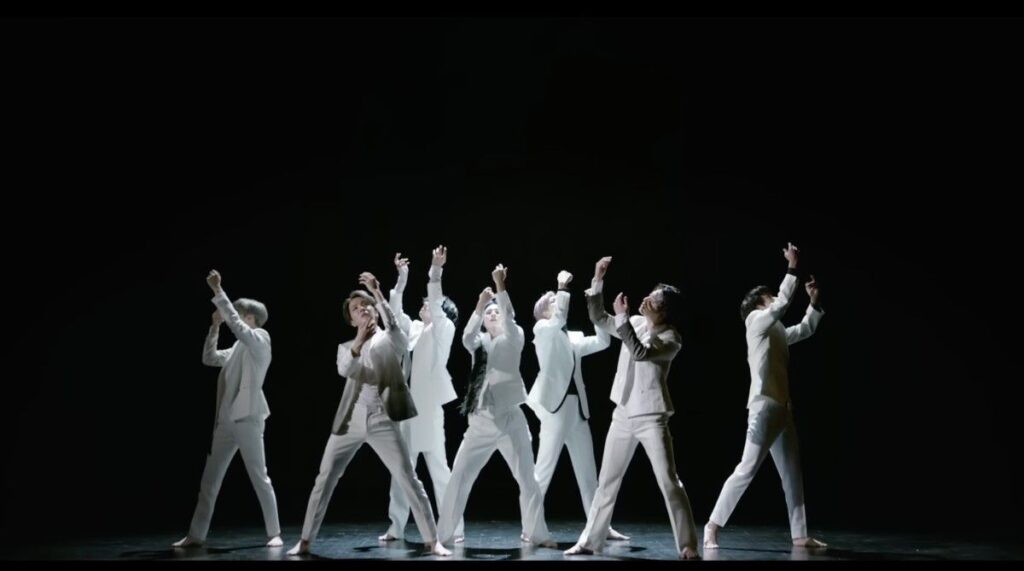
The Art Film (January 17, 2020) featured the Slovenian MN Dance Company performing a modern dance interpretation. No BTS members. Just seven dancers — one for each member — with one representing the “ego” constantly being pulled down by the others, who represent “the shadows.” A cage of light even appears midway through, trapping the swan further.
The Official MV (March 4, 2020) showed BTS themselves performing inside a grand theater, directed by YongSeok Choi of Lumpens. Here, the members visually transform from white swans into black swans — literally embodying the shadow they’ve been singing about.
Both versions nod to the Jungian framework running through the entire Map of the Soul series — the idea of the shadow self, the parts of us we suppress or hide, eventually demanding to be seen. Map of the Soul: 7 was built on Carl Jung’s major archetypes: persona, shadow, ego, and self.
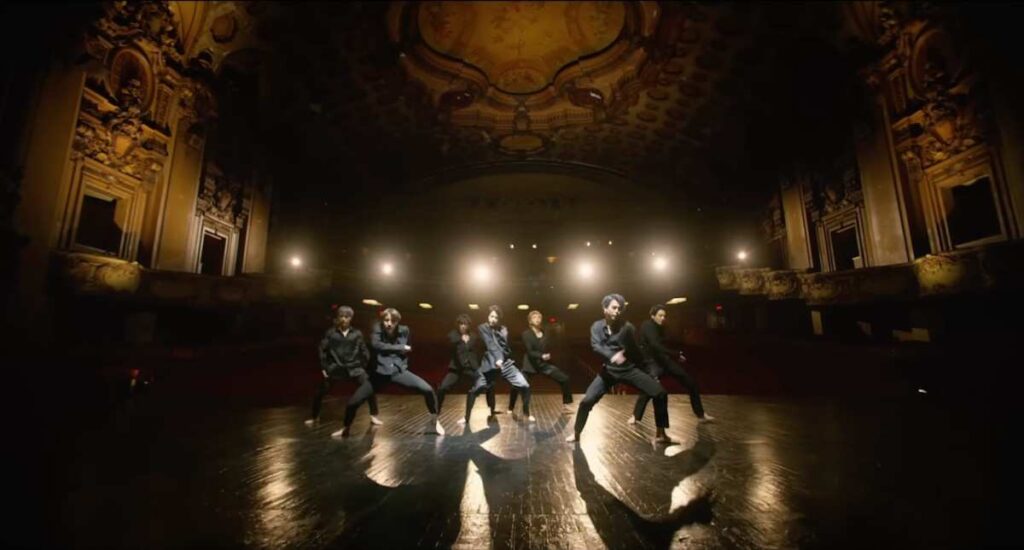
Jimin, who trained in contemporary dance at Busan Performing Arts High School, has a particularly devastating solo in the MV. Members have apparently referred to him as their Black Swan — and watching the performance, it’s not hard to see why.
Why Black Swan by BTS Hits Every Creative Person Differently
Here’s the thing that makes Black Swan genuinely remarkable as a piece of music: it’s not just about BTS. It’s about anyone who has ever loved making something.
Writers. Painters. Photographers. Teachers who once lit up every room. Dancers who now feel nothing in the studio where they used to live. As one Medium writer put it: it’s about the fear of what art does to us, the fear of art not having the same hold on us forever, the fear of existing without purpose.
The song doesn’t offer easy comfort. It doesn’t say “don’t worry, the passion comes back.” It says: face your black swan. Dive into the deepest place. And maybe you’ll find yourself there.
Other BTS songs breakdown you can check out:
Final Thoughts: Black Swan By BTS Is the Most Poetic BTS Song
Look, BTS has no shortage of profound tracks. Spring Day. The Truth Untold. Epiphany. They’ve been writing with emotional depth from basically day one. But Black Swan feels different — more mature, more vulnerable, and more universal in its fear.
Most songs about the artist’s struggle focus on external pressure: critics, pressure to perform, the industry machine. Black Swan goes somewhere rarer. It’s about the terrifying possibility that you might betray your own art simply by growing numb to it. And instead of pretending that fear doesn’t exist, BTS lays it out in full, orchestral-backed, trap-infused, nakedly honest detail.
The fact that RM cried while writing it. The fact that Suga identified with the fear of the first death so personally. The fact that it opened an album — which became the best-selling album in South Korean history — with a confession of artistic vulnerability rather than a victory lap. All of it adds up to something genuinely poetic.
So yeah. In the running for most poetic BTS song? Absolutely. Black Swan earns it.
FAQs: Everything You Wanted to Know About Black Swan BTS
Black Swan is about the fear of losing passion for your art — specifically, the moment when music no longer moves you emotionally. BTS calls this feeling their “first death,” drawing from Martha Graham’s quote that a dancer dies twice, and the first death is more painful. The song ultimately finds hope in the realization that music is irreplaceable to them.
The “first death” refers to the loss of passion — the moment when the thing you love most no longer makes your heart beat faster. It’s described as more painful than physical death because it’s the death of purpose and identity. BTS adapted this directly from the Martha Graham quote that opens the art film.
Black Swan was produced by Pdogg and written by Pdogg, RM, August Rigo, Vince Nantes, and Clyde Kelly. RM took a leading role in crafting the introspective lyrics after rewatching the Darren Aronofsky film of the same name.
The black swan represents the shadow self — the hidden fears and darker aspects of one’s psyche, drawn from Carl Jung’s concept of the shadow. In the art film, one swan dancer (the ego) struggles against the others (the shadows). In the official MV, BTS visually transforms from white swans to black swans, symbolizing full embrace and acceptance of their inner darkness.
That’s personal, of course, but a lot of ARMY consider it one of BTS’s most artistically ambitious releases. The combination of the art film, the Jungian framework, the Martha Graham reference, the callbacks to old hidden tracks, and the raw confessional honesty makes it unlike almost anything else in their discography.

Hi! Just like many of you, I didn’t found BTS. They found me exactly when I needed them the most. I created Army Bangtan World to celebrate BTS and connect with fans who feel the same magic. From their music to their message, this site is my tribute to the boys who changed my life. One beat at a time.

 Arshia
 Fatma
Fatma